
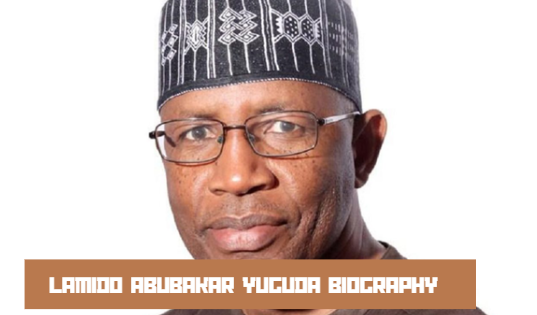

Lamido Abubakar Yuguda is a respected Nigerian economist, investment manager, and financial expert with decades of experience in the banking and financial sector. Over the years, he has built a reputation as a dedicated professional who has contributed significantly to Nigeria’s financial system, particularly through his work with the Central Bank of Nigeria and other global institutions.
With more than three decades of experience in banking, finance, accounting, and economic policy, Yuguda has held several influential roles in both national and international organizations. His deep understanding of financial markets and reserve management has helped shape important economic policies and strategies in Nigeria.
In this detailed biography, we explore Lamido Abubakar Yuguda’s state of origin, age, education, wife, religion, career achievements, and estimated net worth.
Lamido Abubakar Yuguda Biography
| Full Name | Lamido Abubakar Yuguda |
|---|---|
| State of Origin | Anambra State, Nigeria |
| Age | 89 Years |
| Religion | Islam |
| Nationality | Nigerian |
| Profession | Economist, Banker, Investment Manager |
| Wife | Not publicly disclosed |
| Education | Ahmadu Bello University, University of Birmingham |
| Net Worth | Estimated $500,000 |
| Known For | Director General of SEC Nigeria |
Who Is Lamido Abubakar Yuguda?
Lamido Abubakar Yuguda is a Nigerian financial expert who gained national recognition for his leadership role in Nigeria’s capital market and financial institutions. He served as the Director-General of the Securities and Exchange Commission (SEC) Nigeria, where he played a key role in regulating and strengthening the country’s capital market.
Before joining the SEC, Yuguda spent a large part of his career at the Central Bank of Nigeria (CBN), where he worked for more than three decades. During his time at the CBN, he held several senior positions and contributed to the management of Nigeria’s foreign exchange reserves and investment portfolios.
His vast experience in financial management, economic policy, and investment strategies has made him one of the respected figures in Nigeria’s financial sector.
Early Life and Background
Lamido Abubakar Yuguda was born in Nigeria and hails from Anambra State. While many details about his early childhood and upbringing are not widely documented, it is clear that he developed an early interest in finance, economics, and accounting.
His passion for education and professional development played a significant role in shaping his future career in banking and financial management.
Age
Lamido Abubakar Yuguda is reported to be 89 years old. Despite his age, his legacy in the financial sector continues to influence policies and economic discussions in Nigeria.
His decades of service and leadership have left a lasting impact on Nigeria’s financial institutions.
Education
Education played a key role in Yuguda’s professional journey. He pursued higher education in Nigeria and abroad, gaining valuable knowledge in accounting, banking, and finance.
He earned a Bachelor of Science (B.Sc.) degree in Accounting in 1983 from Ahmadu Bello University, Zaria. The degree provided the academic foundation that helped him build a successful career in finance.
Later, he furthered his studies in the United Kingdom where he obtained a Master of Science (M.Sc.) in Money, Banking, and Finance from the University of Birmingham in 1991.
In addition to his university education, Yuguda also completed specialized training in financial asset management and investment performance. He attended executive leadership programs at some of the world’s most respected business schools.
Professional Career
Lamido Abubakar Yuguda’s career spans more than three decades in the financial and banking sector.
Career at the Central Bank of Nigeria
He began his professional journey in 1984 at the Central Bank of Nigeria (CBN) as a Senior Supervisor in the Foreign Operations Department. His responsibilities included maintaining Nigeria’s external debt records.
Over the years, he moved across different departments within the CBN, gaining extensive experience in banking regulation, financial supervision, and reserve management.
In 1985, he worked in the Banking Supervision Department where he contributed to bank licensing and prudential regulation.
Later, in 1988, he joined the Debt Conversion Committee Secretariat where he worked with the pioneer team managing Nigeria’s Debt Conversion Programme.
Investment and Reserve Management
In 1992, Yuguda returned to the Foreign Operations Department where he gradually rose through the ranks. Eventually, he became the Senior Manager in the Investment Office.
In this role, he handled the investment of Nigeria’s external reserves in financial instruments such as treasury bills, fixed deposits, and other global financial assets.
His leadership contributed to the development of investment strategies aimed at preserving and growing Nigeria’s foreign reserves.
International Experience
In 1997, Yuguda joined the International Monetary Fund (IMF) in Washington DC as an economist in the Africa Department.
During his time at the IMF, he worked on economic policy assessments and balance of payment support programs for member countries. His role required analyzing economic conditions and advising governments on financial and fiscal strategies.
He spent four years at the IMF before returning to the Central Bank of Nigeria.
Return to the Central Bank
After returning to Nigeria in 2001, Yuguda led a team responsible for restructuring and diversifying the Central Bank’s growing foreign reserve portfolio.
Under his leadership, several major improvements were introduced, including:
-
Development of a new investment policy
-
Introduction of additional asset classes
-
Appointment of global asset managers
-
Implementation of advanced portfolio management systems
These reforms strengthened Nigeria’s reserve management strategy.
Director of Reserve Management
Yuguda later reached one of the highest points of his career when he became Director of the Reserve Management Department at the Central Bank of Nigeria, a position he held from 2010 to 2016.
In this role, he promoted a strong investment culture focused on risk management and disciplined decision-making.
After many years of service, he voluntarily retired from the Central Bank in 2016.
Director-General of SEC Nigeria
Lamido Abubakar Yuguda later served as the Director-General of the Securities and Exchange Commission (SEC) Nigeria from 2020 to 2024.
As the head of Nigeria’s capital market regulator, he focused on strengthening market transparency, investor protection, and financial stability.
His leadership helped improve confidence in Nigeria’s capital market and regulatory framework.
Latest Development
In recent news, President Bola Ahmed Tinubu approved the appointment of Lamido Abubakar Yuguda as Deputy Governor of the Central Bank of Nigeria, pending confirmation by the Senate.
This appointment is expected to further strengthen Nigeria’s financial leadership and policy direction.
Professional Memberships and Certifications
Lamido Abubakar Yuguda holds several prestigious professional qualifications.
These include:
-
Fellow of the Institute of Chartered Accountants of Nigeria (ICAN)
-
Chartered Financial Analyst (CFA) charterholder
-
Fellow of the Chartered Institute of Bankers of Nigeria (CIBN)
He also obtained specialized certifications in financial asset management and investment performance management.
Leadership Training
Throughout his career, Yuguda attended leadership training programs at several global business schools including:
-
Harvard Business School
-
INSEAD
-
IMD
-
Oxford Saïd Business School
-
Wharton School
-
Kellogg School of Management
-
Chicago Booth
-
London Business School
These programs helped refine his leadership and financial management skills.
Lamido Abubakar Yuguda Wife
Lamido Abubakar Yuguda is known to be a private individual when it comes to his personal life.
Details about his wife or family have not been publicly disclosed, as he prefers to keep that aspect of his life away from the media.
Religion
Lamido Abubakar Yuguda practices Islam.
Religion plays an important role in the lives of many Nigerians, and Yuguda is known to follow Islamic beliefs and traditions.
Lamido Abubakar Yuguda Net Worth
Lamido Abubakar Yuguda’s estimated net worth is around $500,000.
His wealth primarily comes from his long career in banking, financial management, and leadership roles in major institutions.
Height
Although Lamido Abubakar Yuguda’s exact height has not been publicly confirmed, he is often described as having a modest and professional appearance.
Legacy and Contributions
Lamido Abubakar Yuguda has made significant contributions to Nigeria’s financial sector.
His work in reserve management, investment strategy, and capital market regulation has helped strengthen the country’s financial stability.
With decades of experience in both national and international financial institutions, his expertise continues to influence Nigeria’s economic development.
Frequently Asked Questions (FAQs)
1. Who is Lamido Abubakar Yuguda?
Lamido Abubakar Yuguda is a Nigerian economist and financial expert who served as Director-General of the Securities and Exchange Commission (SEC) Nigeria.
2. What is Lamido Abubakar Yuguda’s state of origin?
He is reported to be from Anambra State, Nigeria.
3. What is Lamido Abubakar Yuguda’s religion?
He practices Islam.
4. What is Lamido Abubakar Yuguda’s net worth?
His estimated net worth is about $500,000.
5. Is Lamido Abubakar Yuguda married?
Yes, but details about his wife have not been publicly disclosed.
Conclusion
Lamido Abubakar Yuguda stands out as one of Nigeria’s experienced financial professionals with decades of service in banking, economic policy, and investment management.
From his early days at the Central Bank of Nigeria to his leadership role at the Securities and Exchange Commission, he has played an important role in shaping Nigeria’s financial landscape.
His knowledge, leadership, and commitment to financial stability continue to influence Nigeria’s economic system. As his career progresses, his contributions remain a valuable part of Nigeria’s financial history.
